
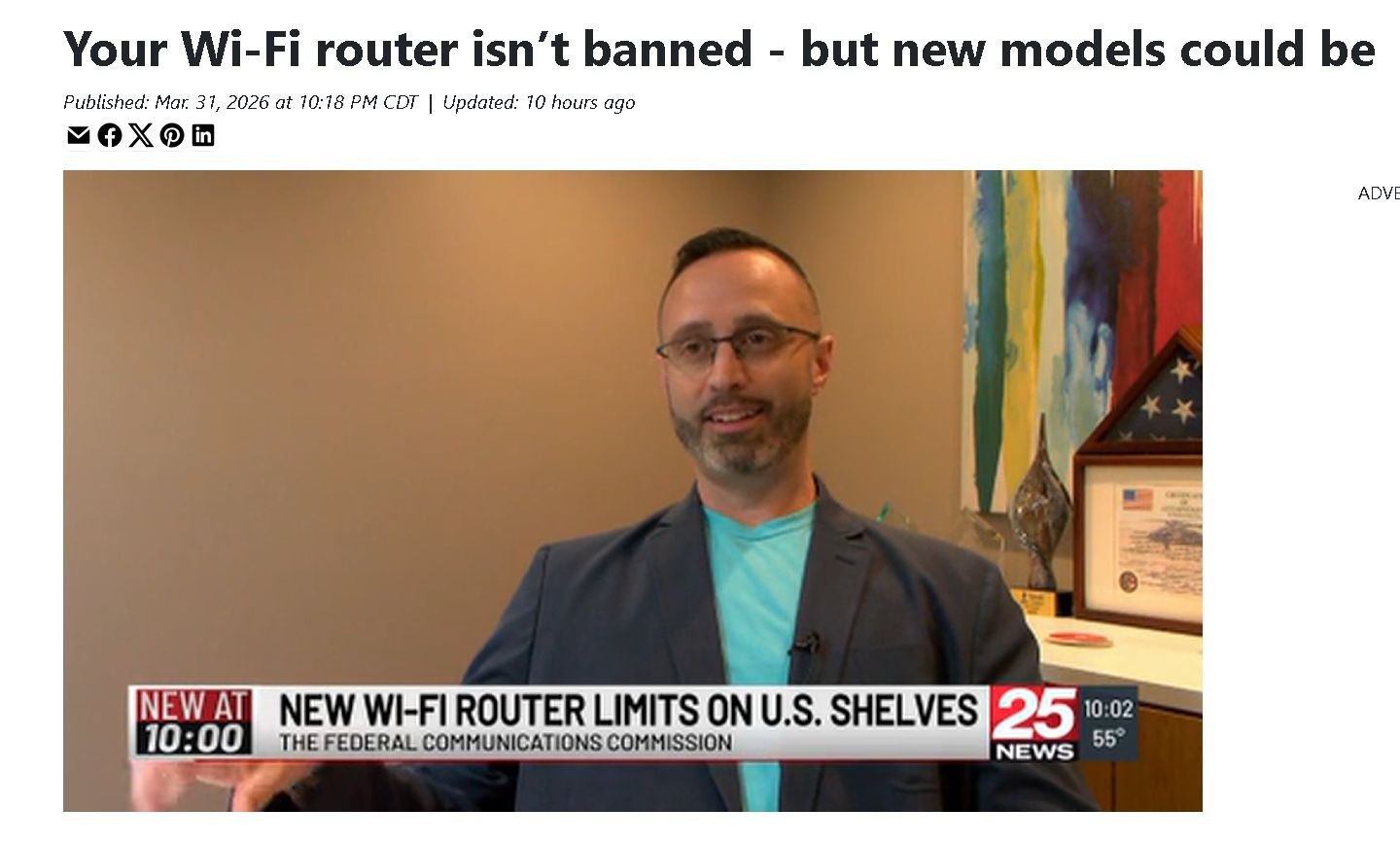
Recent headlines suggest the U.S. government has “banned foreign-made Wi-Fi routers,” but that oversimplifies what actually happened. In reality, the Federal Communications Commission (FCC) issued a March 23, 2026 Covered List update that affects future router sales, not devices already in your home.
What the FCC Actually Did
The FCC added consumer-grade routers produced in foreign countries to its Covered List under the Secure and Trusted Communications Networks Act. This means new router models in this category can no longer receive FCC authorization, which is required before they can be imported or sold in the U.S.
See the FCC’s FAQs regarding recent updates to routers produced in foreign companies here.
However, this is not a recall. The FCC explicitly states that:
- Existing, previously approved routers are still legal to use
- Current inventory can still be sold
- Devices already in homes are not affected
Why This Is Happening
The decision is tied to national security concerns. U.S. agencies have identified risks related to supply chain integrity, including the potential for foreign-manufactured devices to be exploited for espionage or infrastructure disruption.
At the same time, real-world cyber incidents show that outdated and unpatched routers—regardless of brand—are the most common entry point for attackers.
Are You Safe?
For most households and small businesses, the answer is yes, if your router is still supported and updated.
What matters more than where your router was made:
- Is it still receiving firmware updates?
- Are you using strong encryption (WPA2 or WPA3)?
- Have you changed default passwords?
What You Should Do Now
Don’t panic—optimize.
- Enable automatic firmware updates
- Upgrade to WPA3 (or at least WPA2)
- Change admin and Wi-Fi passwords
- Disable unused features like remote access
- Replace end-of-life routers
The Bottom Line
This ruling is about controlling future risk at the supply chain level, not forcing consumers to replace existing devices. The bigger cybersecurity issue remains the same: unsecured, outdated routers, not just foreign-made ones, pose the greatest threat.
For more information on this topic, watch Anthony Mini’s interview on WEEK TV.